PART 1Ch. 1–9
Foundation
- 1Civil Law and How a Civil Case Moves
- 2Court Building and Court Staff
- 3Jurisdiction
- 4Client Meetings and Case Files
- 5Legal Notices
- 6Limitation
- 7Drafting the Plaint
- 8Filing the Suit
- 9Summons and Service
Law college teaches you the law — but nobody really teaches you how a civil court works in everyday practice. On your first days in court, questions like these arrive all at once:
These are the practical questions that every new advocate faces. This book is designed to help you understand them.
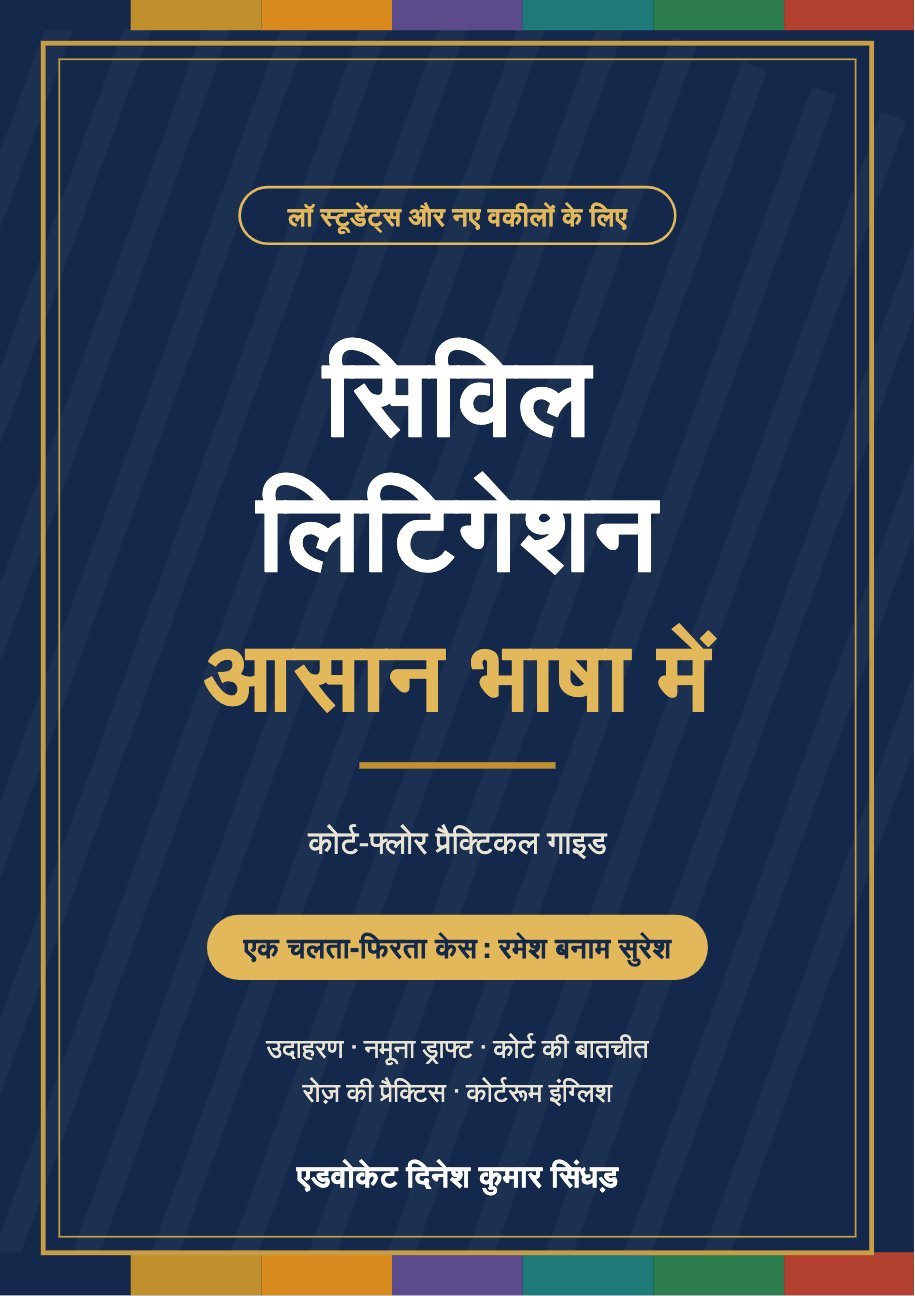
सिविल लिटिगेशन आसान भाषा में — कोर्ट-फ्लोर प्रैक्टिकल गाइड
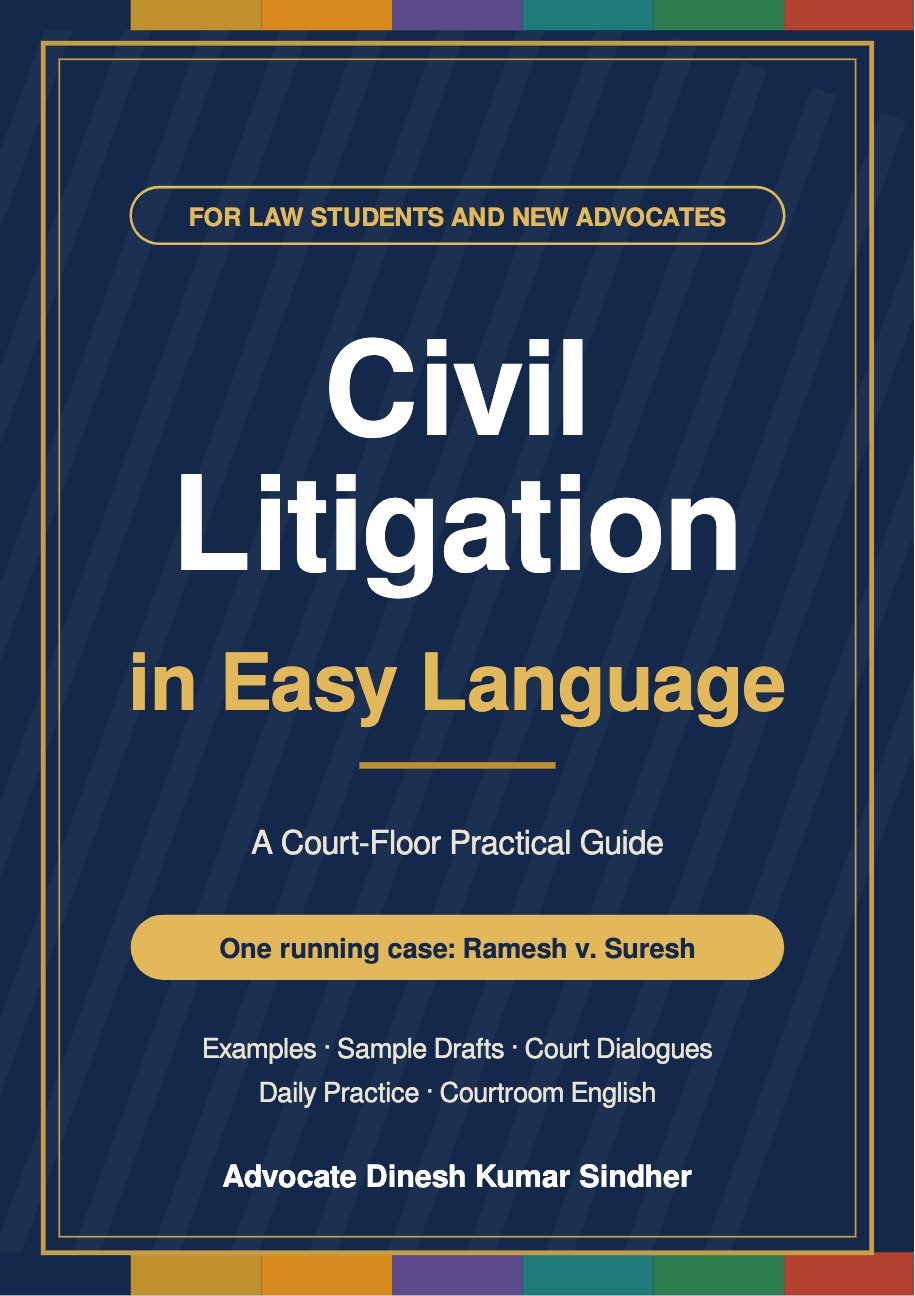
A court-floor practical guide that connects textbook law to the daily working of the civil court — how to talk to the Reader, where the file is deposited, how proof of service comes in, and what you are supposed to do after the Judge says “next date”.
One case. Twenty-seven chapters. A complete journey through civil litigation.
One fictional case runs through every chapter, so you see exactly how each step connects to the next.
Read it in the order a case actually moves — from the first meeting to getting the money or possession in hand.
So you always know where to find the law, the court-floor reality and the words to say.
Seven sample pages shown here. The full English edition runs to 364 pages; the Hindi edition to 311.
The book itself asks you to check every section, Order, citation and limitation period against the bare Act and the latest reports — and flags local practice with “Check in your own court”.
Advocate Dinesh Kumar Sindher practises at the District Courts, Kurukshetra, Haryana. Having experienced the challenges of understanding practical courtroom procedure as a new advocate, he created this guide to help law students and young lawyers bridge the gap between academic legal education and everyday civil court practice.
“I do not want any new junior to spend years just understanding the everyday things of a court.
Buy one edition for ₹199, or get both Hindi and English together for just ₹299. The same 27 chapters and six appendices in each. Digital PDF, readable on phone, tablet or computer.
Payment is handled securely by our payment gateway. After a successful payment you are taken straight to the download page for your eBook(s).
Law students, fresh law graduates, newly enrolled advocates, junior advocates and lawyers beginning civil litigation practice — anyone who wants to understand how a civil court really works day to day.
Yes. It is written for exactly the gap between college and court. It assumes you know the textbook law and shows how it is used on the court floor, in plain language, one step at a time.
Yes. Every chapter includes a Daily Practice Tip, Common Mistakes and Courtroom English, and dedicated chapters cover an advocate's day and diary habits (Ch. 25) and your first 90 days (Ch. 27).
Yes — the Hindi edition, सिविल लिटिगेशन आसान भाषा में (311 pages), is available on its own for ₹199, or together with the English edition in the Hindi + English pack for ₹299. Wherever needed, the English court term is given alongside the Hindi, e.g. वाद-पत्र (Plaint).
Yes — Civil Litigation in Easy Language: A Court-Floor Practical Guide, 364 pages. It is available on its own for ₹199, or together with the Hindi edition in the Hindi + English pack for ₹299.
27 chapters in four parts: Foundation (jurisdiction, client meetings, legal notice, limitation, plaint, filing, summons); The Course of the Suit (written statement, issues, injunctions, ex parte, amendment); Evidence and Judgment (documents, examination-in-chief, cross-examination, commissions, arguments, decree); and Special Routes, Appeal and Recovery (summary suits, appeal, execution, mediation and Lok Adalat, common civil cases, daily practice, Courtroom English, first 90 days). Appendices include sample drafts, a limitation table, a suit checklist, 50 practice questions with answers, a Courtroom English glossary and a list of important judgments.
It is a digital eBook in PDF format. No physical copy is shipped.
After a successful payment, the payment gateway takes you to the download page, where you can download the PDF(s) you bought — Hindi, English, or both. If anything goes wrong, write to {{ supportEmail }}.
Yes. The PDF opens on any phone, tablet or computer with a PDF reader — most phones have one built in. You can keep it beside your court diary on your phone.
No. It is a practical guide to how civil litigation moves, not a commentary. The book itself advises checking every section, Order, citation and limitation period against the bare Act and the latest reports, and confirming local rules in your own court. It is not legal advice.